
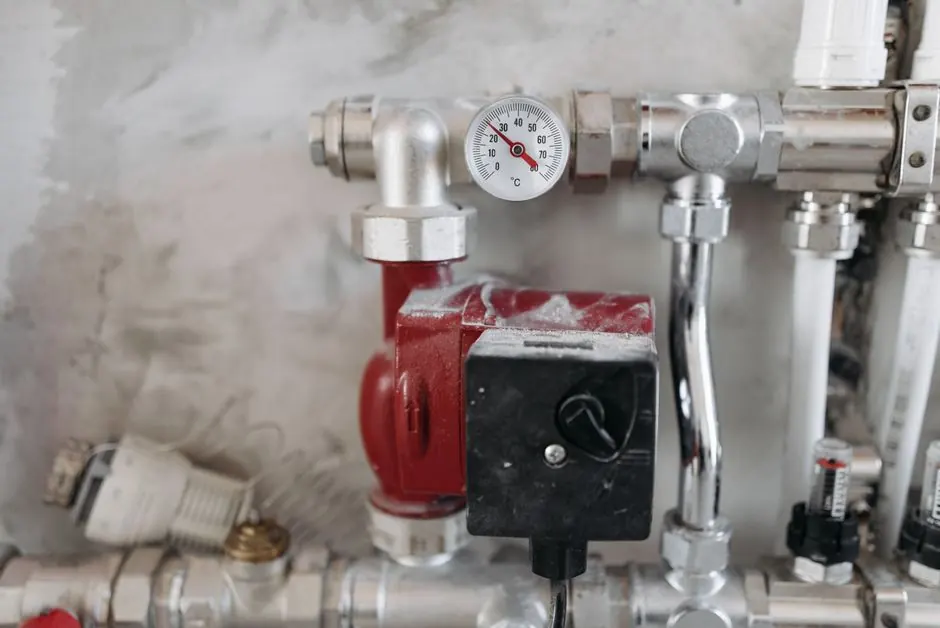
If the boiler fires but heat does not move through the house, the circulator pump, relay, wiring, air, or zoning controls may be involved.
Short answer
If your boiler runs but radiators or baseboards stay cold, the circulator pump may not be moving heated water through the system. The pump itself can fail, but the same symptom can also come from a stuck relay, failed thermostat call, closed valve, trapped air, blocked piping, or a zone valve that never opens. A useful repair visit should confirm whether the pump has power, whether the motor is running, whether water is actually circulating, and whether the problem affects one zone or the whole system.
Do not assume the pump is bad just because the house is cold. Replacing the wrong part can leave the original control or circulation problem unchanged. Start by describing the exact pattern: which rooms are cold, whether the boiler reaches temperature, whether any pipes warm up, and whether the issue appeared after bleeding radiators, service work, a power interruption, or a thermostat change.
What the circulator pump does
In many hot-water boiler systems, the circulator pump moves heated water from the boiler through baseboard loops, radiators, fan coils, or other hydronic emitters. Some homes have one pump for the whole system. Others use separate pumps or zone valves for different areas. The pump may be mounted near the boiler, on the supply or return side, and may be controlled by a relay, aquastat, switching panel, or boiler control board.
When the boiler heats water but circulation is weak or absent, the heat remains near the boiler instead of reaching the rooms. You may notice a hot pipe close to the equipment and much cooler piping farther away. In a zoned home, one level may heat normally while another stays cold. Those clues help separate a whole-system pump issue from a zone-specific control or valve problem.
Common signs of a circulation problem
Common symptoms include baseboards that remain cool, radiators that heat only partly, a boiler that cycles quickly, rooms that recover slowly after setback, or heat that works in one zone but not another. You might hear humming, vibration, clicking from a relay, rushing water, or no sound at all. Noise alone is not a diagnosis, but it can point the provider toward bearings, air, flow restriction, or control chatter.
A pressure or air problem can imitate pump failure. If the system has low pressure, an automatic feed issue, closed isolation valves, or air trapped in high points, the pump may run without moving water effectively. That is why circulation troubleshooting often overlaps with boiler leak and pressure repair and radiator and baseboard heating repair.
What a provider should check
A methodical check usually starts with the thermostat call and the control sequence. The provider should verify whether the boiler receives a call for heat, whether the relay or zone panel responds, and whether the circulator receives the correct voltage. If the pump has power, the next question is whether the motor runs and whether there is actual flow through the loop.
The inspection may include temperature differences across supply and return piping, valve positions, air elimination components, expansion tank condition, wiring, pump flanges, and visible leakage. On multi-zone systems, each zone should be checked separately. A pump replacement may be reasonable when the pump is seized, leaking, electrically failed, or unable to circulate after the rest of the system is verified.
Questions to ask before approving work
Ask whether the diagnosis points to the pump, the control that powers it, a zone valve, trapped air, or system pressure. Ask whether the proposed replacement matches the system requirements and whether any isolation valves, flanges, gaskets, wiring, or air removal work are included. If the pump has failed repeatedly, ask what may be causing premature failure rather than replacing it again without explanation.
For Medford homes with older hydronic distribution, the piping layout may not be obvious from the boiler room alone. Give the provider access to the affected rooms and tell them which spaces heat normally. Good notes prevent a narrow repair from missing the actual circulation pattern.
Related service pages
For a commercial repair request, see boiler circulator pump repair in Medford. For related symptoms, review zone valve and circulation repair, boiler maintenance and power flushing, and request service when you are ready to describe the issue.
How this connects to pressure, air, and zoning
Circulator problems are often discussed as if the pump alone is responsible for every cold room, but hydronic systems depend on several conditions happening at the same time. The boiler has to heat water, the pump has to move it, the piping path has to be open, and the system pressure has to be high enough for water to reach the intended loop. If air collects at high points or the pressure is too low, a working pump can still fail to deliver heat where it is needed.
Zone controls add another layer. A thermostat may call for heat, but the control panel may not energize the pump or open the correct zone valve. In other systems, the pump may run only after a zone valve end switch proves that the valve opened. That means a cold room can look like pump failure when the real issue is a valve, relay, transformer, thermostat wire, or air-bound branch. The more clearly you describe which areas work and which do not, the easier it is for the provider to test the sequence in the right order.
When you request help, avoid asking only for a pump replacement. Ask for circulation diagnosis. That phrasing keeps the visit focused on the real outcome: restoring flow through the affected heating loop. It also gives the provider room to explain whether the repair belongs on the pump, the zone control, the pressure side of the system, or the distribution piping.